
The NAT section is used to configure Network Address Translation settings for SIP and media communication. These settings help ensure that SIP signaling and RTP audio traffic are routed correctly when the PBX system is operating behind a router.
By specifying your external IP address and defining local network ranges, the system can correctly route SIP and RTP traffic between internal and external devices, avoiding one-way audio or connection issues.
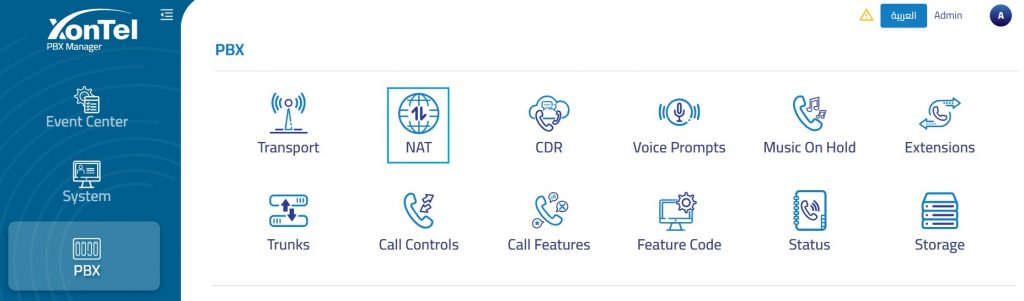
NAT Configuration
The NAT configuration defines how the PBX identifies its public address and local networks during SIP communication.
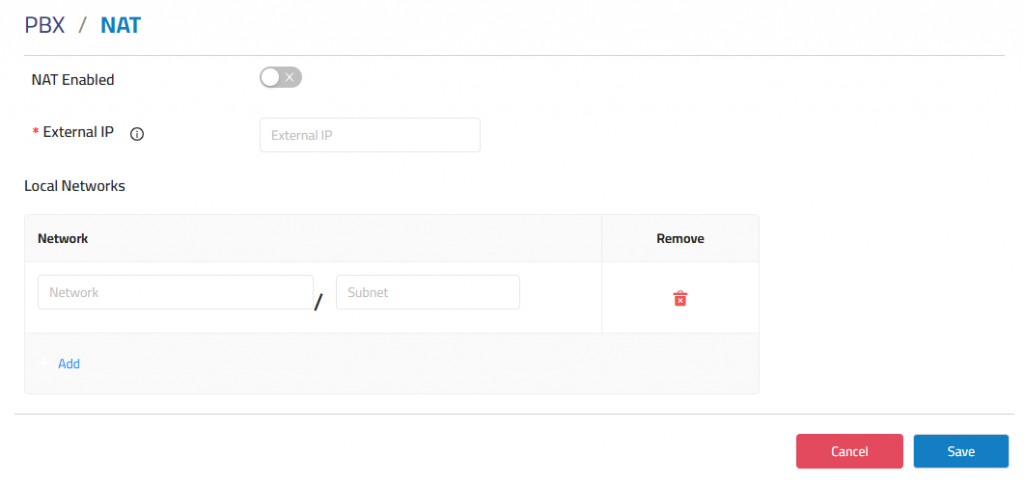
Enable NAT: Enables or disables NAT handling for SIP and media traffic.
External IP: Defines the public IP address used by external SIP endpoints and providers to reach the PBX.
Network
The Local Networks area defines the private network ranges that should be treated as internal networks by the PBX. These entries help the system determine whether SIP endpoints are located inside the local network or connecting from an external network.
ADD: you can add more than one local network.